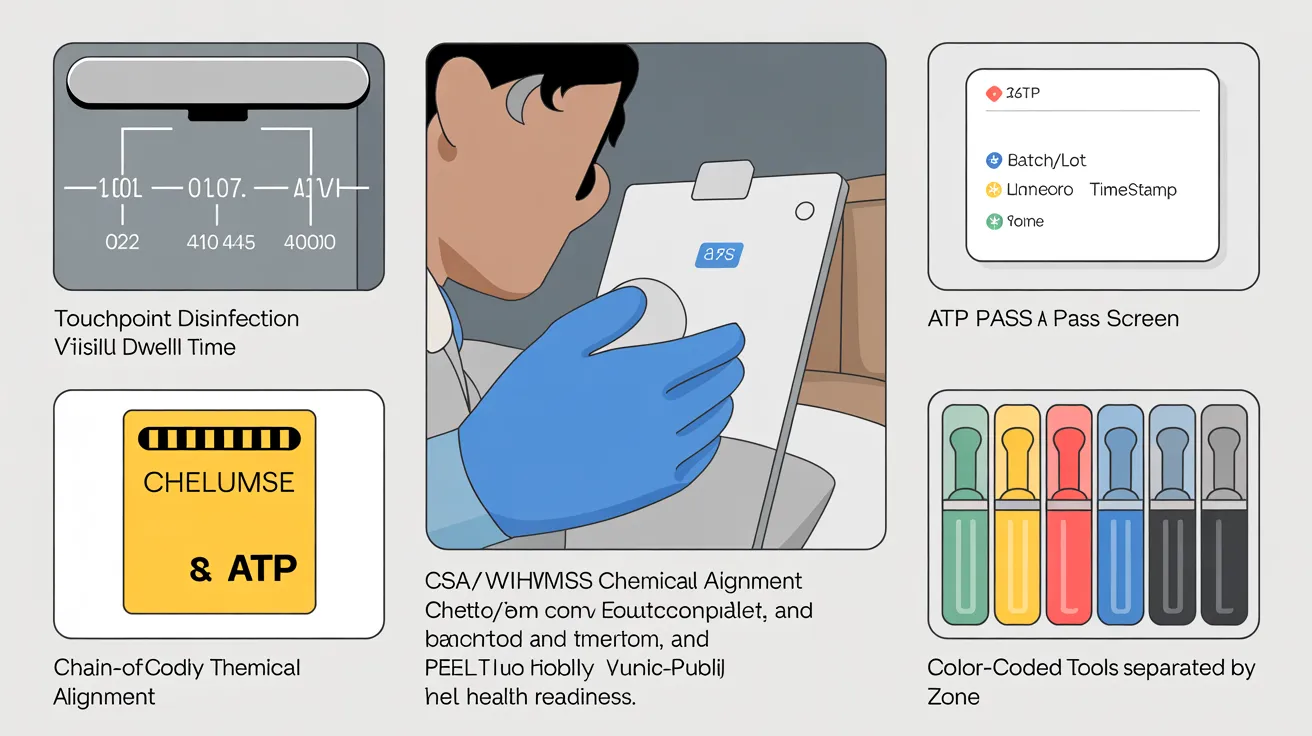
Find Brampton commercial cleaning and sanitation experts who align with CSA, WHMIS, and Peel Public Health. You'll receive SOPs, SDS access, comprehensive monitoring, precise mixing records, and timestamped proofs. We validate disinfection with ATP/fluorescence, maintain dwell times, and employ ECOLOGO/Green Seal, DIN/EPA-registered solutions. Teams operate off-peak with access controls, color-coded tools, and secure tracking for disinfectants. Traceable records, CAPA workflows, and sector-specific protocols (office, retail, healthcare, industrial) are included. See how we minimize interference while enhancing adherence.
Key Takeaways
- Comprehensive SOPs following CSA, WHMIS, and Peel Public Health guidelines with documentation prepared for audits featuring lot tracking, SDS libraries, and verified service timestamps.
- Risk-based sanitation protocol: featuring touchpoint identification and mapping, EPA-registered disinfectants, verified contact times, ATP/fluorescence verification methods, and periodic third-party microbiological testing.
- Operational efficiency: implementing non-peak timing, micro-crews, security protocols, chain-of-custody for chemicals, and controlled distribution with service records.
- Environmental leadership: Green Seal/ECOLOGO certified solutions, closed-loop dilution systems, advanced microfiber technology, thorough waste evaluations, and ISO 14001-aligned diversion metrics.
- Thorough quality management with oversight checks, corrective action procedures, staff development tracking, and regulatory reports customized for municipal requirements, insurance standards, and regulatory bodies.
Professional Cleaning: A Critical Need for Brampton Businesses
While regular daily cleaning keeps spaces looking tidy, commercial cleaning guarantees your Brampton facility adheres to safety, health, and compliance protocols. You need standardized processes conforming to local requirements, validated cleaning solutions, and properly calibrated equipment to minimize contamination risks and liability. Skilled technicians utilize proven operational procedures, color-specific cleaning implements, and specific timing protocols to ensure thorough contamination removal and residue cleanup while protecting materials.
You'll benefit from comprehensive assessments that track traffic patterns, touchpoints, and HVAC impacts, then set measurable frequencies and QA checks. Seasonal considerations matter: winter conditions require entrance cleaning and floor mat care; warm season moisture needs moisture control and fungal protection; transitional seasons introduce pollen and debris that necessitate enhanced filtration and high-dusting. Detailed records, safety data sheet access, and disposal protocols facilitate reviews and verify regulatory compliance.
Markets Served: Offices, Retail, Healthcare, and Industrial
Your business requires sanitation procedures that comply with commercial space needs-high-contact surface sanitization, scheduled floor upkeep, and waste management protocols-while meeting local health and safety bylaws. For healthcare, you need CSA- and IPAC-compliant procedures, Environmental Protection Agency certified cleaners, verified contact duration, and chain-of-custody documentation for biohazard handling. In industrial settings, you require WHMIS/GHS labeling, safety lockout procedures, dust containment measures, and documented standard operating procedures.
Workplace and Store Protocols
When operations span across multiple locations including offices, retail spaces, healthcare centers, and industrial facilities, sanitation procedures need to comply with industry-specific requirements and measurable quality standards. For office and retail environments, you must establish timing, methodology, and confirmation protocols per section. Utilize floor plans to chart traffic intensity, touchpoints, and material sensitivities, and organize duties according to risk levels. Establish suitable cleaning solutions, concentration levels, and application times; maintain safety data sheet accessibility and equipment calibration records.
Implement workplace standards for: zone-specific glove protocols, cord organization, quiet-hours procedures, and warning displays for accident avoidance. Create a color-specific protocol for tools to avoid cross-zone contamination in restrooms, break rooms, and public spaces. Plan systematic HEPA vacuum cleaning, cleaning material changes, and refuse sorting. Monitor results using biological monitoring, maintenance records, and remediation processes based on inspection standards and customer SLAs.
Medical and Industrial Compliance Standards
Because of healthcare and industrial settings carry higher risk profiles, we implement proven procedures that meet regulations and withstand audit scrutiny. You get site-specific Standard Operating Procedures compliant with CSA, Public Health Ontario, and OSHA/WHMIS requirements. We deploy color-coded tools, closed-loop chemical dilution, and barcode-logged tasks to guarantee traceability, infection control, and contamination prevention.
Within our clinics, we implement Spaulding classifications, conduct terminal cleaning, and utilize EPA-registered disinfectants with verified wet contact times. We confirm outcomes through ATP verification and comprehensive audit checklists. Areas containing sharps receive puncture-resistant waste disposal and detailed chain-of-custody documentation.
In industrial settings, we manage lockout/tagout procedures, combustible particulate management, and specialized non-sparking equipment usage. Surface degreasing is performed with friction coefficient validation. We maintain instrument accuracy, oversee SDS libraries, conduct hazard communication education, and create compliance reports meeting your audit protocols and insurer requirements.
Essential Sanitization Guidelines for Frequently Contacted Surfaces
Though routine cleaning clears visible dirt, sophisticated disinfection protocols target microbial reservoirs on high-touch surfaces with proven, measurable methods. You'll start with touchpoint mapping to inventory commonly touched surfaces including doors, railings, switches, taps, elevator buttons, payment systems, and shared equipment. Assign risk tiers, specify dwell times per EPA-registered disinfectant, and record material compatibility to minimize surface damage. Standardize sequence: clean first, apply product, ensure proper contact time, and confirm.
Apply electrostatic application for uniform coverage of intricate shapes; calibrate nozzles, validate droplet size, and monitor pass speed. Perform rapid hygiene monitoring or fluorescent indicators for instant quality confirmation, and schedule periodic third-party microbiological swabs for quality assurance. Educate staff on donning/doffing, product documentation review, and batch monitoring. Document lot identifiers, chronological data, and staff identifiers for compliance preparation and incident traceability.
Green Products and Eco-Friendly Solutions
You'll choose green-certified cleaning agents that satisfy ECOLOGO or Green Seal certifications and adhere to WHMIS and SDS protocols. You'll put in place waste reduction strategies, including microfiber technology, dilution monitoring, reusable dispenser systems, and source-separated recycling according to Brampton and Ontario requirements. get more info You'll confirm performance with VOC restrictions, biodegradability standards, and regular audits to record compliance and continuous improvement.
Sustainable Cleaning Materials
Establish a higher compliance bar by specifying green-certified cleaning products that comply with recognized standards including ECOLOGO (UL 2792/2795), Green Seal (GS-37/GS-53), or EPA Safer Choice. In your eco certifications summary, document the product identifier, certification ID, dilution ratios, pH range, VOC content, and SDS references. Require third-party certifications on containers and validate listings in each certifier's online registry.
Select concentrates compatible with microfiber systems, floor scrubbers, and high-touch cleaning protocols. Select surface-active compounds with fast decomposition, non-NPE formations, and reduced water toxicity levels. Determine residue limits to promote allergen minimization on frequently used areas and in indoor air quality-critical spaces. Establish controlled dispensing systems to prevent overuse and preserve ppm accuracy. Train staff on contact duration for disinfectant alternatives conforming to Safer Choice's partner criteria. Perform three-month assessments, analyze residual compounds, and monitor deviations with remedial measures.
Effective Waste Management Approaches
While maintaining stringent hygiene standards, establish waste reduction by standardizing sustainable and reusable systems across sites. Begin by conducting Waste audits to quantify material streams by volume, contamination levels, and disposal expenses per department. Apply results to specify robust dispensers, concentrated chemicals, microfiber equipment with tracked laundering and color-coded bins. Mandate vendor take-back for containers and pallet retrieval.
Integrate compost programs for kitchen and break room organics, ensuring that disposal liners conform to ASTM D6400 and waste handlers accept them. Adjust waste removal frequency according to bin fill-level metrics to avoid overflow and pest concerns. Train personnel with standard operating procedures, clear signage, and quarterly updates. Track key performance indicators: material recovery rates, per-capita disposal, and procedural violations. Document processes to meet local regulations and ISO 14001 specifications.
Smart Scheduling to Limit Downtime
To ensure operational continuity, flexible scheduling ensures cleaning is performed outside peak hours to avoid service disruptions and revenue losses. You establish specific service windows, enhanced through after-hours coordination, so staff functions when facility usage is minimal. We analyze your operating calendar, blackout periods, and mandated closures, then align work procedures to prevent interference with shipments, inspections, and upkeep.
To ensure smooth operations, we employ staggered shifts and specialized teams with position-based guidelines, time-tracked assignments, and quality standards. Staff members adhere to workspace comfort parameters, and apply rapid-cure solutions to decrease turnaround time. Security protocols, asset monitoring, and record-keeping processes maintain oversight. We meticulously record operational metrics, problem resolution, and occurrence tracking to fulfill operational guidelines, industry protocols, and municipal requirements while preserving efficiency.
Deep Cleaning vs. Regular Maintenance: What to Know
Because operational risk and compliance requirements vary according to the task, it's essential to maintain a clear distinction between routine maintenance (daily and weekly hygiene maintenance to preserve hygiene standards) and deep cleaning (scheduled thorough remediation that restores hard-to-reach and critical spaces). You should allocate daily upkeep to frequently contacted areas, restrooms, flooring, and shared equipment using validated cleaning agents, microfiber cleaning materials, and contact-time certified disinfectants. You need to document schedules, safety gear, procedures, and results.
Implement thorough sanitization as periodic maintenance guided by hazard mapping: key zones such as ceilings, ventilation returns, grout areas, equipment backs, drains, and permeable materials. Apply bioluminescence or UV markers to validate before and after outcomes, escalate to HEPA filtration, scale removers, and steam cleaning where biofilm risk exists. Define operational procedures, color identification, and tool isolation to reduce cross-contamination. Monitor observations, remedial measures, and follow-up schedules to sustain standards.
Compliance With Health and Safety Standards
Your maintenance plan will only be effective if it complies with statutory and industry requirements, so link every task to specific standards and maintain proof of conformity. Connect each surface, chemical, and method to industry standards and regulatory requirements. Maintain SDS libraries, dilution logs, lot tracking, and measurement verification logs. Train staff on protective equipment protocols and safety measures. Install color-coded tools and closed-loop chemical systems to eliminate cross-contamination. Plan internal audits, preserve checklists, photos, and corrective actions to ensure inspection readiness. Monitor regulatory updates from Peel Public Health and provincial authorities; revise SOPs, signage, and risk assessments accordingly. Validate disinfectant contact times with ATP testing and document results. Manage access to storage, label secondary containers, and conduct ventilation checks with documented maintenance.
Expert Services for Post-Event and High-Volume Situations
Despite compressed maintenance timeframes during peak periods, it's essential to have swift, standards-compliant remediation that ensures cleanliness levels without impacting daily operations. We provide specialized crowd management protocols that systematically partition zones, evaluate soil conditions, and utilize quick-acting formulations verified against ASTM and Health Canada protocols. We carry out complete sterilization of common contact points such as rails, seats, and concessions using DIN-registered products with specified contact times.
When treating floor surfaces, we apply slip-resistance-preserving detergents, machine clean paths, and microfiber maintenance systems to reduce re-soiling. We separate waste materials per municipal bylaw, with sharps, glass, and organics managed via marked receptacles and tracking. Post-function odor elimination utilizes source removal, enzyme-based solutions, and MERV 13-18 air filtration to restore IAQ benchmarks. Washroom servicing encompasses descaling, grout sanitation, and restocking aligned to occupancy projections.
Expert Personnel and Quality Control Standards
Those event-scale protocols only function when certified professionals implement them under a structured QA framework. You depend on certified professionals who adhere to SOPs corresponding to CSA, WHMIS, and manufacturer guidelines. Each technician undergoes fundamental and periodic skill assessment on chemical interaction, dwell times, microfiber sequencing, and ATP verification. You require chain-of-custody logs for disinfectants, calibrated meters, and zone-specific color coding to avoid cross-contamination.
Your quality control process follows a closed-loop approach. Team leaders execute comprehensive audits with established protocols, testing frequently contacted areas through ATP measurements and visual inspections. Compliance gaps generate remedial responses, root-cause analysis, and targeted retraining. All service proofs are timestamped, including photographic evidence maintained in regulatory archives for trend analysis and review. Regular quarterly simulations, personal protective equipment evaluations, and refresher training modules keep skills fresh and objectively assessed.
How to Choose the Right Cleaning Partner in Brampton
When selecting a Brampton cleaning service provider, look beyond pricing and review documented adherence, employee protocols, and control measures. Validate workplace safety insurance and liability protection levels, along with industry certifications (including ISSA, GBAC). Obtain standard operating procedures, chemical inventories with SDS, and machinery upkeep logs. Ensure criminal background screenings, immunization policies where needed, and adequate management oversight. Ensure formal instruction on WHMIS, exposure control procedures, and local regulations, covering waste management and sharp object protocols.
Review quality control protocols including scheduled inspections, ATP or fluorescence testing, and improvement tracking systems with documented remediation steps. Require performance metrics (response times, quality incidents) and problem resolution procedures. Balance requirements with financial constraints through measurable frequencies, task lists, and operational standards. Confirm green product certification and airflow system alignment. Establish emergency protocols for outbreaks, supply disruptions, and after-hours access control.
Common Questions and Answers
What Are Typical Contract Lengths and Cancellation Policies for Cleaning Services?
Cleaning service agreements typically follow monthly, semi-annual, or annual periods. The agreements specify information regarding scope, KPIs, renewal options, and cost modifications. Contract termination clauses usually allow for 30-60 days' notice for standard cancellation, while direct termination is permitted for serious issues like safety violations, expired insurance, or nonperformance issues. Premature cancellation usually requires cancellation charges. Make sure communication requirements (paper or digital), resolution timeframes (five to fifteen days), and payment reconciliation are clearly defined to maintain compliance.
Can I Get Emergency Spill or Biohazard Cleanup Outside Regular Hours?
Indeed - we deliver after hours services for spills and biohazards. Like a red alarm cutting through midnight silence, we'll dispatch a fast dispatch team within 60-90 minutes. Our team comes in PPE, establish biohazard containment, secure HVAC if required, and follow OSHA, WHMIS, and local public health protocols. We document chain-of-custody for waste, conduct ATP verification, and provide incident reports. You authorize by phone; we deploy instantly and bill under emergency service rates.
How Do We Ensure Staff Safety and Security for On-Site Services?
We provide thoroughly vetted through a multi-stage screening procedure. We run thorough national and local criminal screenings, validate identity, and confirm right-to-work status. We collect two professional references as we confirm employment history and work record. Drug tests are administered as mandated by client SOPs. Everyone must finish required safety training, WHMIS/OSHA training, bloodborne pathogens education, and site-specific orientation. We perform annual background re-checks for every technician. All technicians maintain general liability, pollution, and workers' compensation coverage; all certificates and endorsements will be supplied upon request.
Can Services Integrate With Building Access Control and Security Protocols?
Yes. You can align operations with your building's security and access control systems through defined integration protocols and strict credential management. You'll provision time-bound badges, role-based permissions, and geofenced access. We'll enable API or OSDP integrations, log synchronization, and visitor access protocols. You'll maintain multi-factor authentication, minimal access rights protocols, and verified credential assignment. We'll maintain operational protocols, incident response, and revoke credentials immediately upon access requirement updates. You'll get compliance reports and unauthorized access warnings.
How Are Cleaning Tasks and Service Performance Tracked Through Reports and Dashboards?
Monitor operations effectively with a KPIs dashboard and mobile logs offering detailed, dependable compliance oversight. The system displays live status information, including check-in times, location data and adherence to service agreements. You can sort data by zone, shift, or technician and create thorough documentation. The system allows monitoring of resource utilization and compliance verification. Data protection is guaranteed with structured access management and advanced data protection, while built-in APIs support detailed performance analytics.
Final Thoughts
You're not simply employing cleaning staff-you're investing in a precision tune-up for your facility's health. With calibrated disinfection for high-traffic surfaces, eco-certified chemistries, and inspection-ready records, you'll meet standards like a metronome. Flexible scheduling maintains business flow, while post-event surge services remove gathering traces. Skilled professionals, systematic procedures, and performance reviews guarantee uniformity. Select a Brampton service that demonstrates adherence, confirms outcomes, and scales with you-so your space shines like a well-instrumented lab, sanitized, secure, and compliant.